 dssub
By Cameron Voss · Reviewed November 26, 2026
GLM-5.4 arrived from Zhipu in November 2026, and its pitch runs against the usual scaling formula. Nothing was added to the model. Instead, every token makes a second trip through the middle 28 layers before the final output. Zhipu named the approach Loop Transformer and credits that repeat pass with lifting a 750B system to a 2T to 3T system's effective depth. The release also adds image understanding, which the company frames around generalized coding: generating video, interactive games and 3D scenes from code.
A few days on the GLM Coding Plan were enough to show the split between model and service. Since the API remains closed, the subscription is the only entry point. My Max tier cost 1,078 yuan each month, close to $150, and I bought it partly for the faster queue. Then came six jobs: a machine-shop estimator, a marketing page, an art portfolio with a storefront, an email client, and two 3D scenes.
The architecture bet
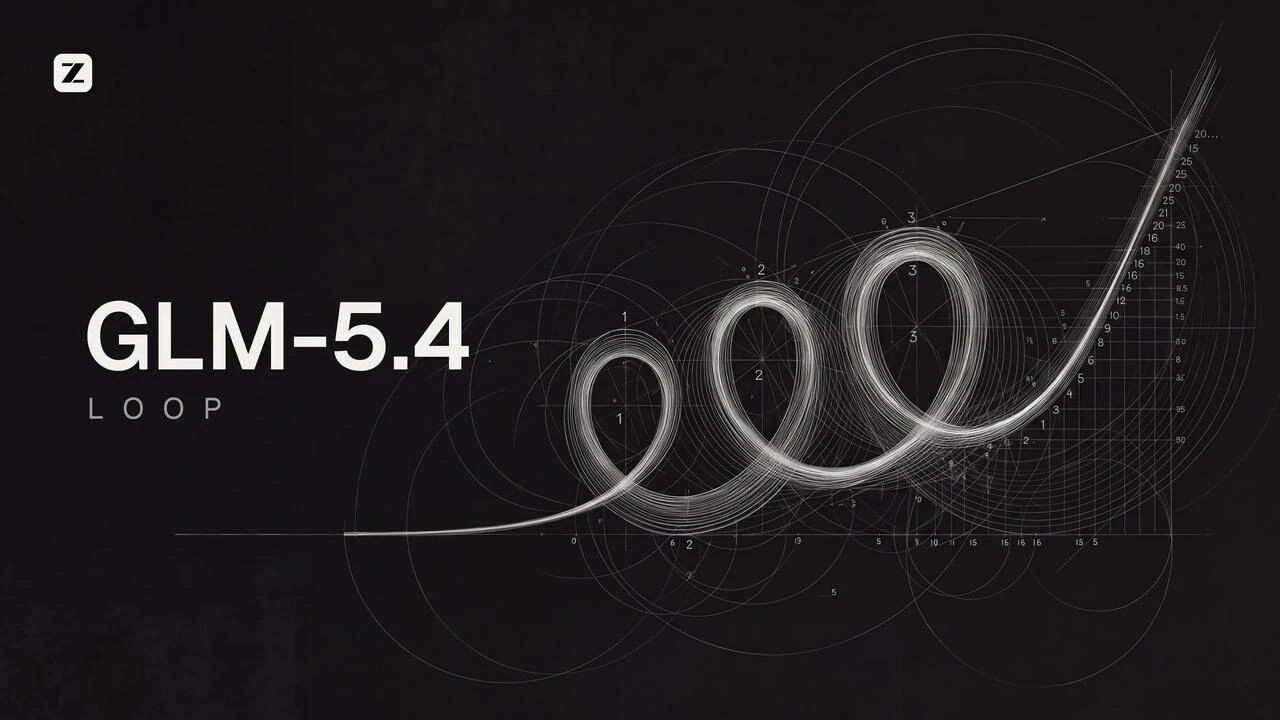
Standard attention stacks move each token across every layer once. GLM-5.4 routes it through the middle 28 again, which raises compute per token without adding parameters. The 2T to 3T equivalence is a company claim. Zhipu shipped no official benchmark suite with the model.
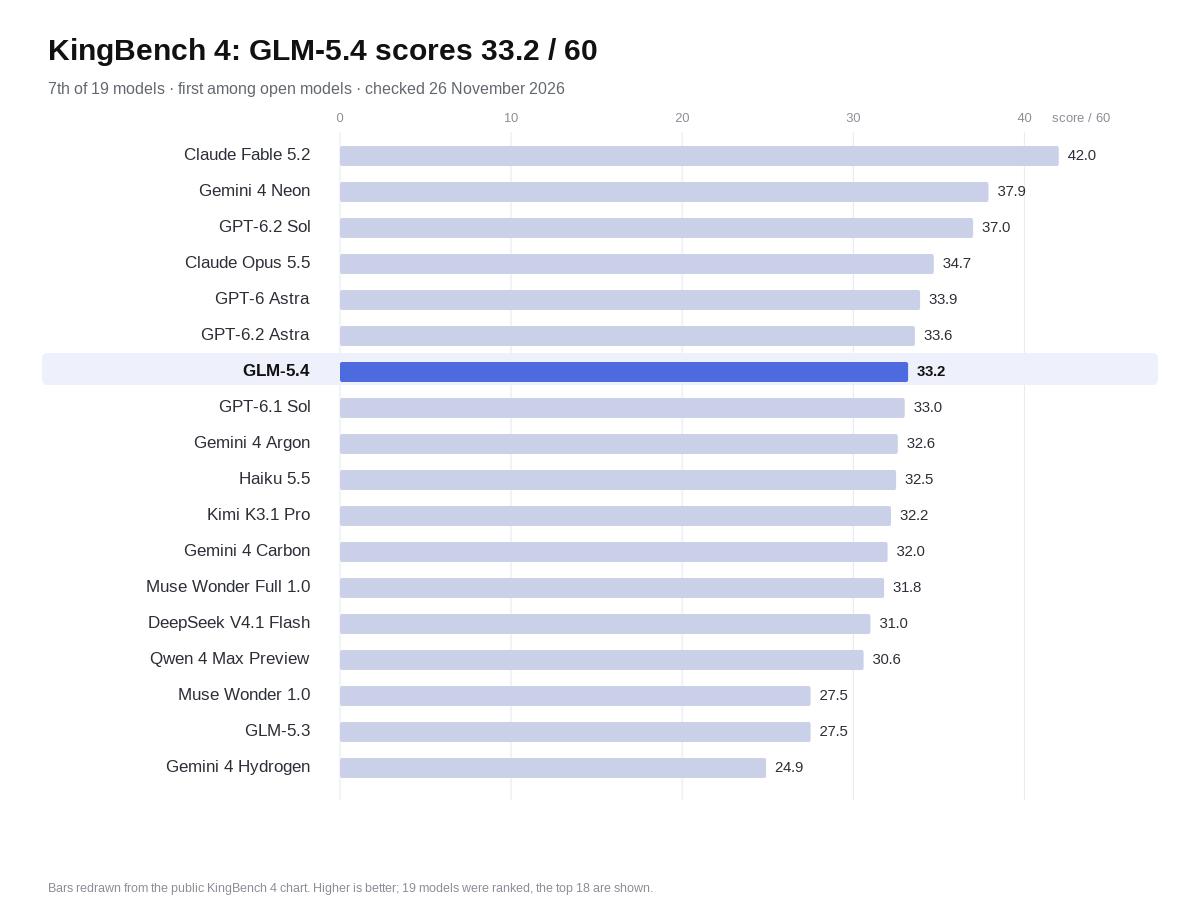
The independent KingBench 4 supplies the public number. GLM-5.4 lands on 33.2 points out of 60. Among 19 ranked models that is 7th place, and no open model scores higher. GPT-6.2 Astra still sits 0.4 points up. Claude Fable 5.2 holds first place at 42.0, and Gemini 4 Neon ranks second on 37.9. Four tenths of a point across a 60-point range is narrow, but narrow is not level. GLM-5.4 now shares the closed models' second tier; it has not caught the leader.
Vision is the other new capability. Reading a screenshot or a layout lets a coding model rebuild it, and Zhipu's demos go further into code-driven video, interactive games and 3D assets. The scope is broader than any webpage benchmark, and the tests below mostly live in that territory.
Entry is restricted. Until a public API arrives, the GLM Coding Plan carries the product. Max runs 1,078 yuan per month, near $150, chosen for its faster queue.
Six briefs, sorted by how much the prompt decided
Each prompt was written in English and held constant: same copy, same layout constraints, same pass criteria. I never adjusted wording for individual models. What I wanted was a fixed brief, not any model's best result.
Seen together, the six split along one line. The more completely the prompt specified the target, the closer GLM-5.4 came to the best comparison model. The more room it left for interpretation, the more the gaps showed.
Tight briefs, top-tier output
The solar system was the strongest build. It came with an interactive model, a switch for true scale, a guided walkthrough and a table of planetary distances. With true scale on, planets shrank to dots but kept their relative positions. The tour traveled to Mercury and generated craters procedurally. Distances were anchored to a Sun the size of a 12-inch beach ball: Earth shrank to a peppercorn 107 feet off, with Neptune over half a mile farther out. The same prompt had gone to Claude Opus 5.5 earlier. In true-scale view, the two builds were almost impossible to separate.
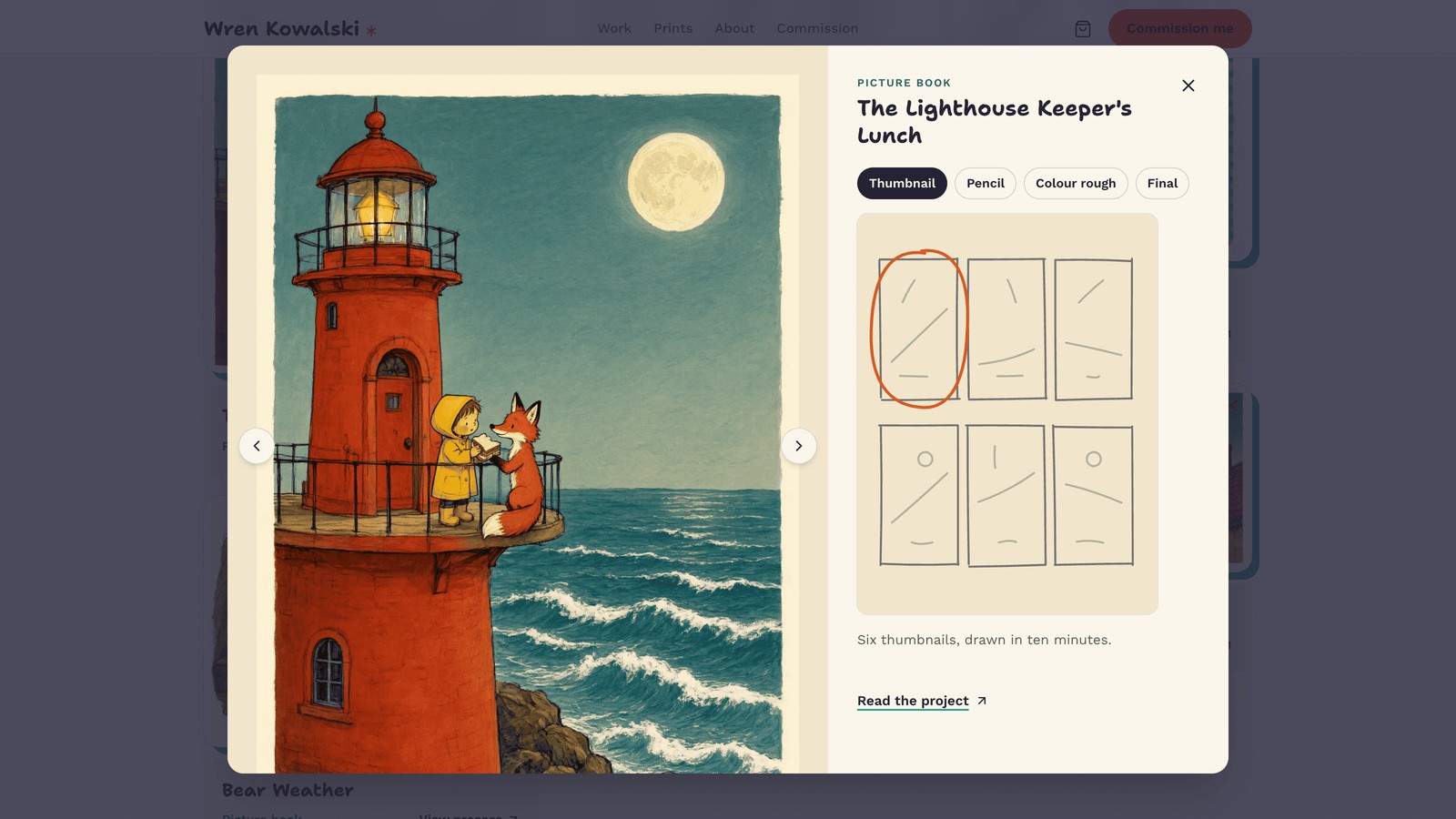
The portfolio brief mixed display with sales: selected work, a look at the process, and prints offered for purchase. GLM-5.4's opening paired a handwritten title with a gouache lighthouse, and the underline landed beneath the intended word. Kimi's underline slipped a line. The process panel separated them further. GLM-5.4 drew half a dozen thumbnails in code and ringed the winner in red; Kimi used placeholder hills and houses instead. Even the cart behaved, free-shipping meter included. GLM-5.4 took this round without much doubt.
The aquarium request bundled a floor plan, animal profiles, feeding schedule and timed admission. Its hero matched the GLM-5.3 build almost exactly, since copy and image treatment were pinned by the prompt. The floor plan was the actual contest. GLM-5.4 produced five areas, gave every one a label with a name plus its depth, and linked each area to a matching profile. GLM-5.3 offered five numbered boxes and no labels. Credit belongs to the generated artwork, not the surrounding page.
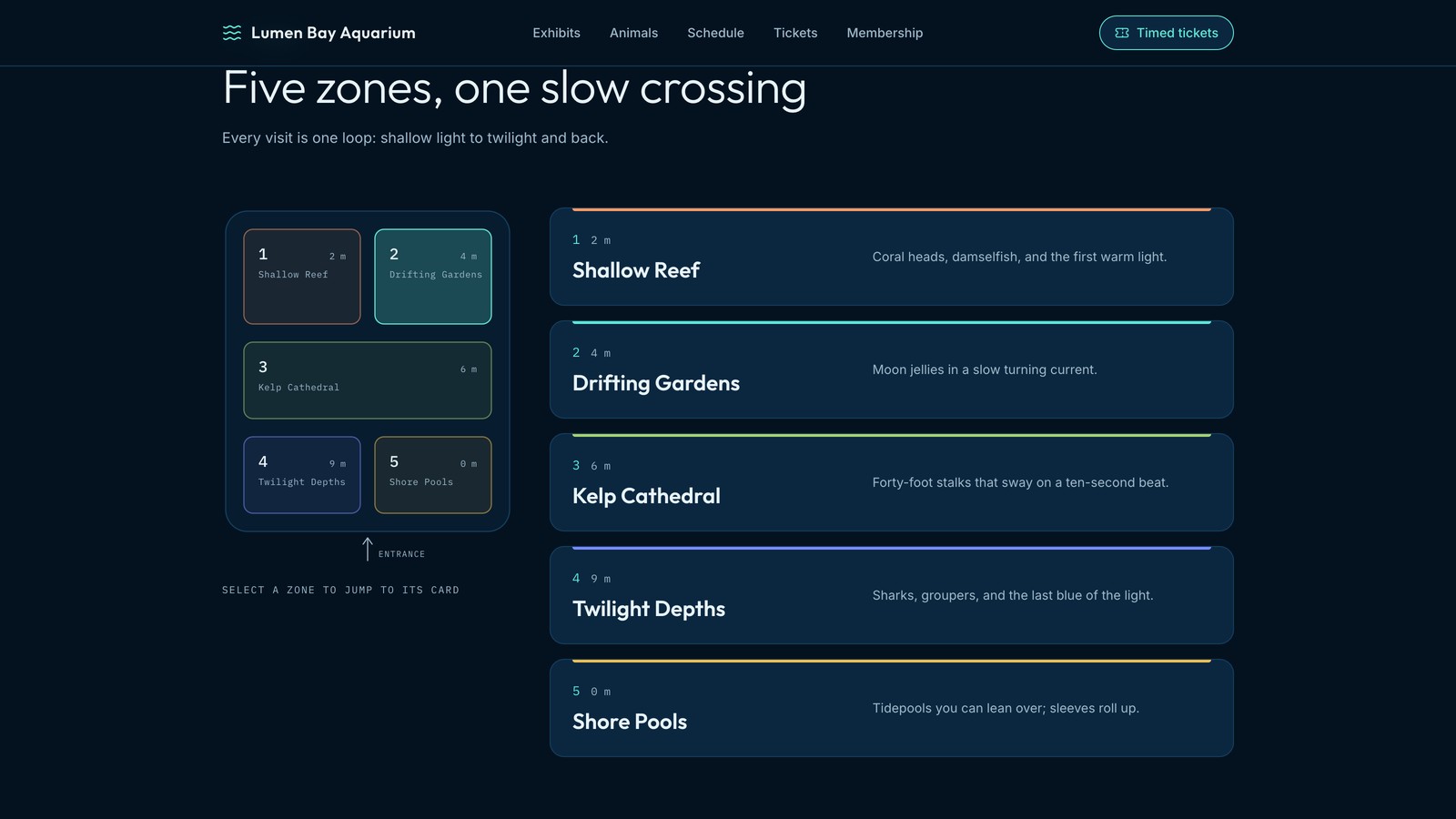
A brief so complete that the model stopped mattering
The machine shop needed a quoting tool. A visitor selects process, material, finish and batch size, then sees price and delivery estimate. GLM-5.4 quoted 16 working days, with units priced between $17 and $22, and the math itemized line by line. I had already given the same prompt to GLM-5.3 and Kimi K3.1 Pro. Structurally, the three answers barely differed. When a brief is this explicit, the prompt outweighs the model.
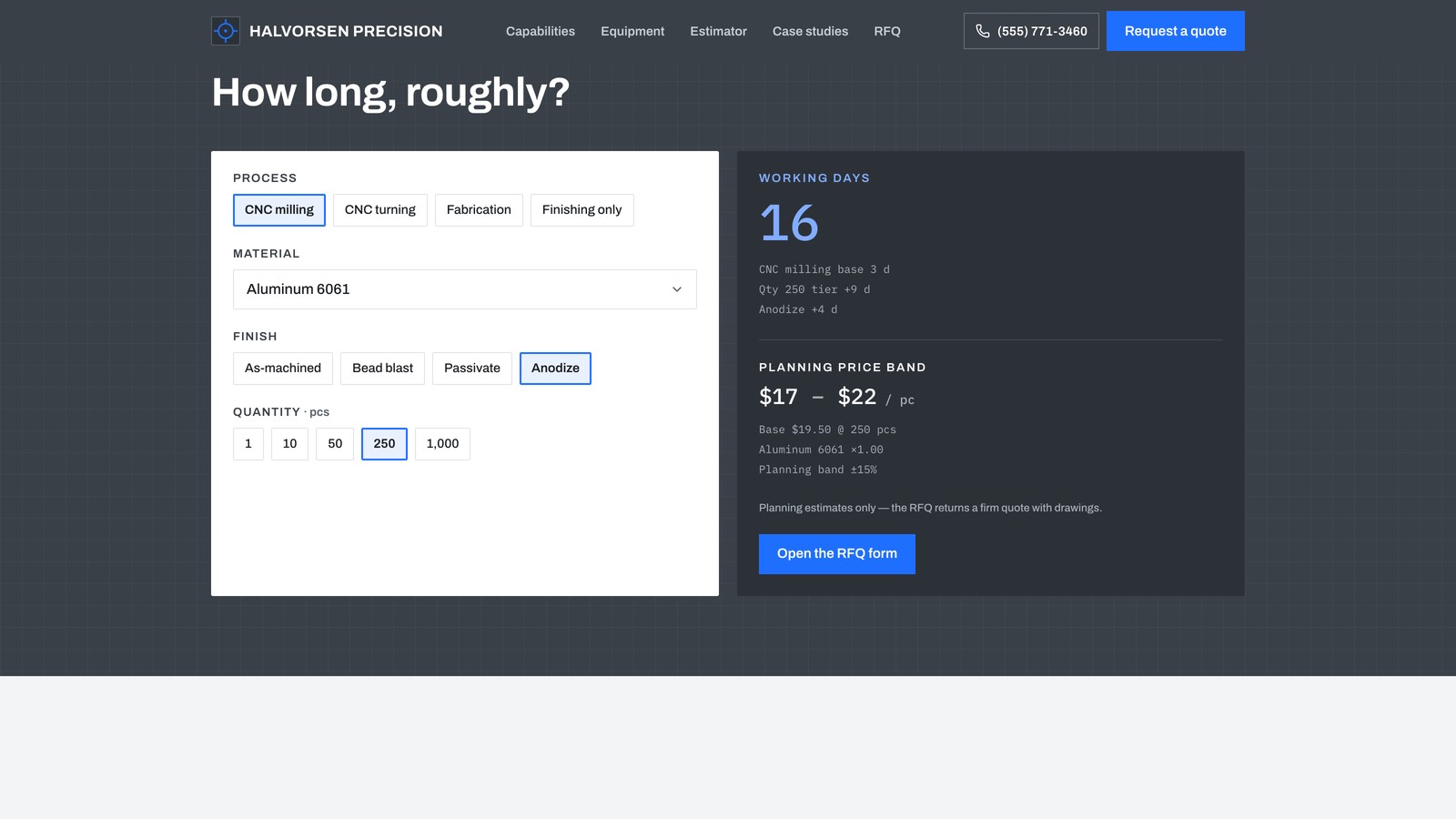
Invention and recovery: where it slipped
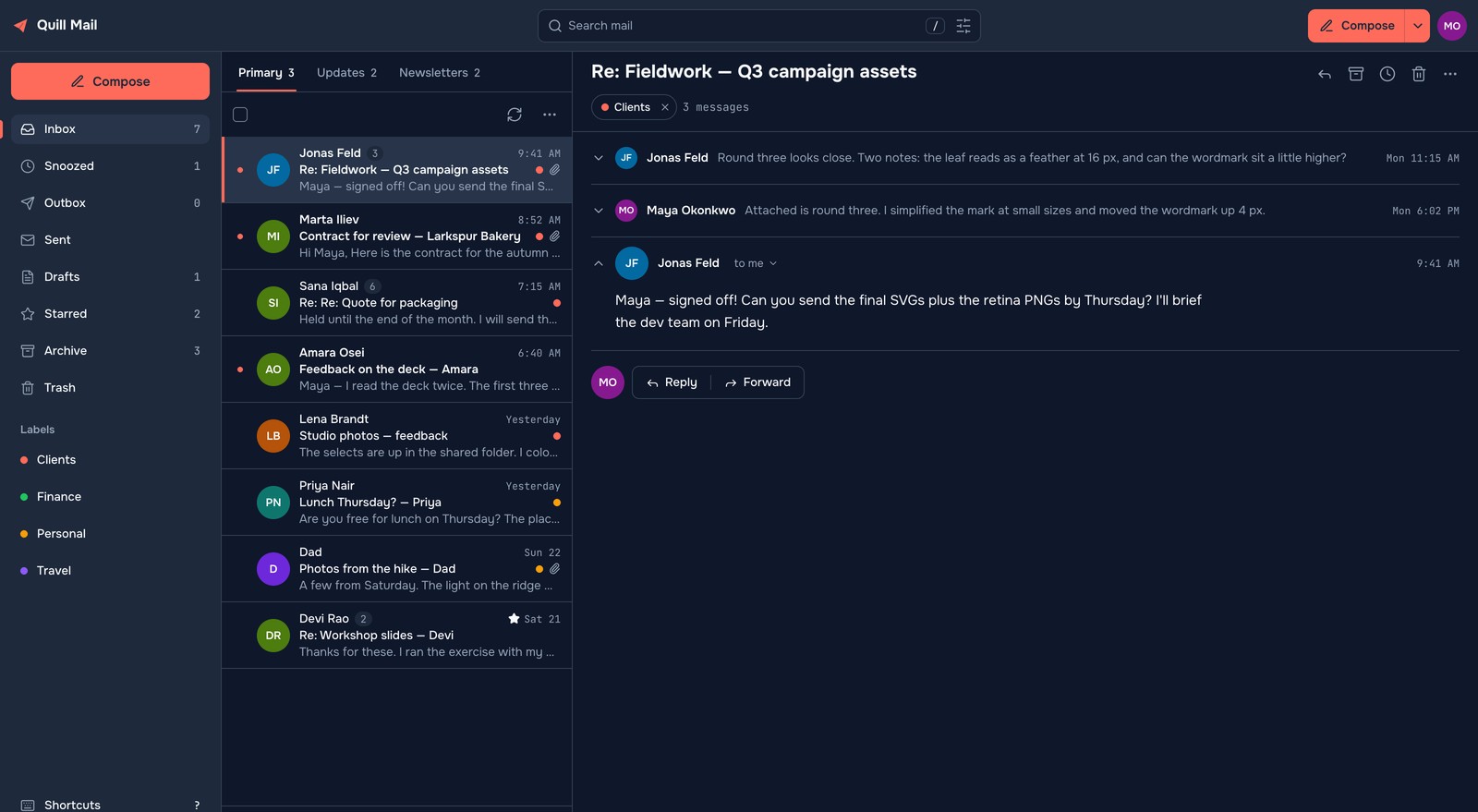
The email client called for three panes, folders, labels, conversation threads, search and shortcuts. GLM-5.4 returned a usable product. Search narrowed the list while I typed, and threads stayed whole in the reading pane. Compose carried the defect: the C shortcut launched the window and also typed a c into the To field. It happened on every attempt. Kimi's version had no such flaw and showed attachments as cards. Kimi takes this one.
The final 3D task was a Three.js flight simulator in low-poly style: seaplane, dusk-to-day lighting shift, water, clouds, rings, radar. It played. The plane did not hold up. Wings and struts looked tangled, and the silhouette refused to resolve into any identifiable aircraft. GPT-6.2 Sol answered with a float-equipped high-wing seaplane over an island with more depth. Gemini 4 Neon gave the better sunset. Scene assembly is one skill; conjuring a 3D object with no reference is another, and only the first showed up here.

Scorecard
| Build | What GLM-5.4 returned | Standing |
|---|---|---|
| Solar system | True scale, tour, distance table | Level with Claude Opus 5.5 |
| Illustrator portfolio | Six-frame modal, cart completes | Ahead of Kimi K3.1 Pro |
| Aquarium site | Labeled map, zones tied to cards | Ahead of GLM-5.3 |
| Machining site | Estimator: 16 working days, $17-$22 | Same as Kimi K3.1 Pro, GLM-5.3 |
| Email client | App works; compose key bug | Kimi K3.1 Pro stays ahead |
| Flight simulator | Runs; airframe unconvincing | Two models lead: GPT-6.2 Sol, Gemini 4 Neon |
The queue sets the ceiling
Latency announces itself early. One public comparison, posted soon after launch, timed Gemini 4 Neon and GLM-5.4 on an identical basketball-court scene. The first finished in 11 minutes; the second needed 108. My own runs were milder, though the shape held.
Six parallel jobs tripped the account limit, so I queued them one after another. During a weekday afternoon, every second tool call or so returned 529, the overload status. Identical calls on GLM-5.3 completed cleanly. One reasoning burst spent 12 minutes and produced 130,000 characters before returning one sentence and a lone tool call. Separately, a 3D animation job consumed 1.5 hours across 97 failed requests, and its code was only just written when I cut it off. The five-hour quota climbed from 6% to 45% with nothing finished.
Part of that came from launch-week traffic. Part came from a model inclined to think at length. The workflow consequence is identical. Twenty minutes per answer makes a demo; two hours turns the job into batch work that you schedule.
Who should pay
GLM-5.4 improves on GLM-5.3 by a clear margin. Give it a well-specified page, app or 3D scene and the output lands near the strongest models here; the portfolio even beat Kimi. Difficulty appears when geometry must be invented or a vague interaction must be repaired. None of the six builds supported the 2T to 3T comparison. What they did show was strong implementation work behind a serving layer that is slow and inconsistent.
Current GLM Coding Plan subscribers can send page and 3D jobs to GLM-5.4 whenever a long wait fits. Stay clear of the weekday rush, roughly 14:00 to 18:00 Beijing time. Anyone buying for the first time should let capacity catch up first. A 1,078 yuan monthly Max tier is difficult to justify when peak hours reject half the calls.
The API remains shut, so for now this is a coding-plan product. Zhipu's most interesting release this year is the Loop Transformer. Its serving layer is the part that needs work next.
Review the GLM family
For now, GLM-5.4 can be used only on the GLM Coding Plan. If you want to look over the GLM family's published specs and rates before picking a tier, the GLM model page gathers them in one place.